'Design Protocols' Lecture @ AUTh

Friday, March 8, 2013 § 2

Design Protocols Lecture: Friday, March 8th, 10am @ the School of Architecture of the Aristotle University.


rethink Athens competition: 2nd prize.

Wednesday, February 27, 2013 § 0

The results of the second phase of the rethink Athens competition has just been announced today at the Onassis Cultural Centre. We are happy to say that we were awarded with the 2nd prize. The nine shortlisted proposals are on display at the Centre.

It was the result of really intense work during the last 4 months and the outcome of a collective effort that includes several people who participated in the project, one way or another.

More will follow soon.


object-e @ ScalelessSeamless? conference.

Thursday, November 15, 2012 § 0

Tommorrow I will be presenting at the "ScalelessSeamless? Performing a Less Fragmented Architecture and Education" conference that takes place in the Münster School of Architecture in Münster, Germany. The title of the presentation is "From Fields to Agent-Based Systems" and starts at 10:00am. Here is the site of the conference and here the full program.


object-e @ (new) panel layout for competition

Tuesday, June 26, 2012 § 0


A new book has been just published by damdi publications under the title (new) panel layout for competition. The book includes 6 object-e projects: Inje(un)ction, FLOW, TOGS, inflateit, para*site and Glowing Cloud.


infrared @ re:act fest

Friday, May 11, 2012 § 0


The new infrared installation will be on display on May 11 and 12 and 15 at Block 33, Thessaloniki as part of the re:act fest. The opening is on Friday May 13th, at 19:00.

Fields part II: Morpher/BlendShapes

Saturday, January 28, 2012 § 5

Morphing, is the technique where a transition between two images is achieved seamlessly. The technique was (of course) developed initially for cinematographic purposes. As we read on filmsite.org, the first time it was used extensively was in the movie the willow, in 1988. One of the most impressive early movie examples was in Terminator 2: the judgment day. There the T-1000 cyborg terminator was equipped with the ability to morph into any kind of object (it was actually supposed to be made out of a morphing metal); the running time of the morphing scenes are counting up to 16mins (again according to filmsite.org). A very interestin example in the arts is the work of Daniel Lee and more specifically his 1993 manimal series (from these series Ben van Berkel and Caroline Bos are using the "year of the ox" in order to explain their 'hybrid building' concept). Of course, 3D motion effects could not stay out of the game in such a case. Most 3D packages today include tools able to transform seamlessly one piece of geometry into another (morphing or blend shapes). 3D morphing is based on the position of vertices of the objects. There is a base object (the one being animated) and one or several targets. The vertices of the base object are interpolated on paths created between the initial position of the vertices in the base object and the position of the vertices in the target objects.

The base concept behind 3D morphing however, while applied extensively in computer animation, is not that new. In ~1480, painter Piero della Francesca publishes his third book De Prospectiva Pingendi where he deals with the 3-dimentional representation of objects. As we read on this article, the book is composed out of three chapters: The first deals with the projection of 2-dimentional shapes and the second extends that to the projection of 3-dimentional shapes. The third chapter however appears to be the most interesting: there he describes what he calls 'The other method'. This 'other method' (meaning 'not Alberti's perspective method') is illustrated through drawings that are explaining how it can be used in order to represent a human head: First he draws cross-sections from top to bottom and then axial sections from the center of the head. The intersection of the two sets of sections, gave him 128 points positioned around the human head. All this process is already amazing considering the time that it was made, but the really amazing part comes next: Piero della Francesca was able to use those points and their relations in order to rearrange them and subsequently in order to be able to draw any other posture of the human head, in essence achieving auxiliary projection some hundreds of years before that was actually invented by Gaspard Monge. On a first note this is a great example of how one can shift from a representational method to a generative one. The representation of the intersection points of the two sets of sections, becomes a generative tool that allows the creation of any other position of the head.

Images of human head with orthographic projections & Head rotated from Piero della Francesca's, De prospectiva pingendi, Book 3, figures lxiv & lxvii. (Casa Editrice Le Lettere, source: http://www.thelancet.com)


Considering the relation with morphing, while Piero della Francesca's 'other method' is not exactly the same as contemporary morphing techniques, the similarities are nevertheless still striking: both methods are using points (the intersection points in the first case, the vertices in the second) strategically positioned on a surface that through their relative positions can be used in order to represent several other 'incarnations' of the surface.

When coming to initial contemporary practices in 'digital' architecture, morphing had a critical role. One of the main reasons was that morphing made possible explorations of the topological transformations of an object. Now, topology is a rather over - and extensively mis - used term in architectural cycles. It was used heavily in order to denote any kind of computer generated, curved form, the same way 'blobs' were used before that and 'parametric' is used now. We all have heard more than enough times how topology is an alternative to Euclidian geometry, meaning in essence curved forms vs rectilinear forms. For better or for worst though, topology has nothing against Euclidian geometry, since topology is not a different geometry at all (at least not in the sense that Riemannian geometry for example is); on the contrary, most topological studies remain within the Euclidian 'field'. Euclidian - or for that matter any kind of - geometry is studying the state of an object. Topology however is concerned with the transformations of an object. In other words, there is no such thing as a topological surface or object. The only thing that can be topological is a transformation. If we were to over-simplify, geometry is quantitative - the sizes of an object is what matters - topology is qualitative - it is connectivity, continuity and convergence that matters -. In short, the topology of an object is preserved when that object goes through continuous deformations. On the other hand the topology of an object changes if for example a new hole is introduced to it. Therefore, morphing is concerned exactly with that aspect: the way an object is transformed continually, moving from one geometrical shape to another while keeping its topology the same.

And this is the point where topology becomes a very useful concept in architecture today, and morphing a very useful tool that helps to study that concept. Because, if we were to abstract the principles of topological thinking, we could see that is not the state of an object that matters but the transformations that it goes through. Or, if we were to take that in a more philosophical level, we don't care so much about the being of an object, or whatever it is that we are studying, but we focus instead on the becoming of an object. If we consider the classic example of a cube morphed into a sphere, it is not really the sphere or the cube that we care about; it is the cube becoming a sphere - or the sphere becoming a cube - that is of interest (as in Terminator 2: it is not T-1000 as a human or T-1000 as a small lake of liquid metal that has an impact on us; it is the small lake of metal in a state of becoming human that is the most frightening). Consequently, identity is defined through difference: it is not what something is, but what something is in the process of becoming that matters, and therefore the differences between the stages of the transformation are the ones that are helping us identify it as the same object. On a different level, topology can help us understand a little better - or see from a different view - the difference between constants and variables; what are the things that have to remain the same and what are the things that can change values, in order for something to keep its identity.

During the last six years I have been working quite a lot with blend shapes and morphers, as a useful tool to study the above, and therefore developed several simple tools to help me deal with morphing. My main aim was to have tools that would allow me to use the different (but topologically equal) version of an object all at the same time, in the context of a field (see this post for more on fields). The concept for all of them is simple: an array of one object that gets locally differentiated according to specific factors. As a side note, all of them are more like a base to expand upon than fully developed tools.
1. surfaceBlendShapeField.ghx: this is a grasshopper definition that takes the idea of a blend shape and distributes it in a field. The local differentiation is based on the distance of each element from point or/and curve attractors. Quite primitive in relation to the next ones, but it can be easily expanded.
2. morphField_v1.ms: This is the same idea implemented in maxscript and it is much more robust than the rest. It is installing expressions that are controlling the value of a morphed target in all the objects of the field.

3. blendShapeFieldWithAttractors_v1.mel: this is the exactly the same as the above, only that it is implemented in mel for maya. Also, it is a little bit less user-friendly than the maxscript version - as is always the case with maxscript vs mel for me.

4. fluidsToBlendShapes.mel: This is a similar idea, implemented in mel, only that it is not using points to drive the blendShapes, but the density of maya fluids, which can give some very interesting results. Both mel scripts were initially written for the SKG in flux workshop that took place in 2009 with some minor updates added to them later. This an animation produced with the last script during the workshop:

SOPA Black Out.

Wednesday, January 18, 2012 § 0


The internet is based on protocols. Protocols are the means to control. SOPA/PIPA bills are taking control from the users transfering it over to centralized places of power. Therefore, they are threatening the very existence of the net as we know it.
Learn more.

Madren 5340: opening today

Friday, January 13, 2012 § 0

The new infrared installation will be on display on January 13,14 and 15 at the Art|House gallery-bar, as part of the event platforma 1. The opening is on Friday Jan 13th, at 20:00.

Merry Christmas

Saturday, December 24, 2011 § 1

It was a strange year the last one, but not without its moments. I hope 2012 will prove to be better. Merry Christmas and a happy new year to everybody!


Hilbert Snowflake was designed and fabricated last Christmas.

infrared @ SYMBIOSIS

Thursday, October 6, 2011 § 0

A new infrared project, under the title 313/315 is part of the SYMBIOSIS exhibition at the hotel Ariston, in the context of the XV Biennale de la Mediterranee.
The exhibition is opening on Friday, October 7th, at Hotel Ariston, Dioikitiriou (Karaoli & Dimitriou) 5. Starting at 21:00 and onwards.

Of patents, trolls and differential geometries.

Monday, September 5, 2011 § 3

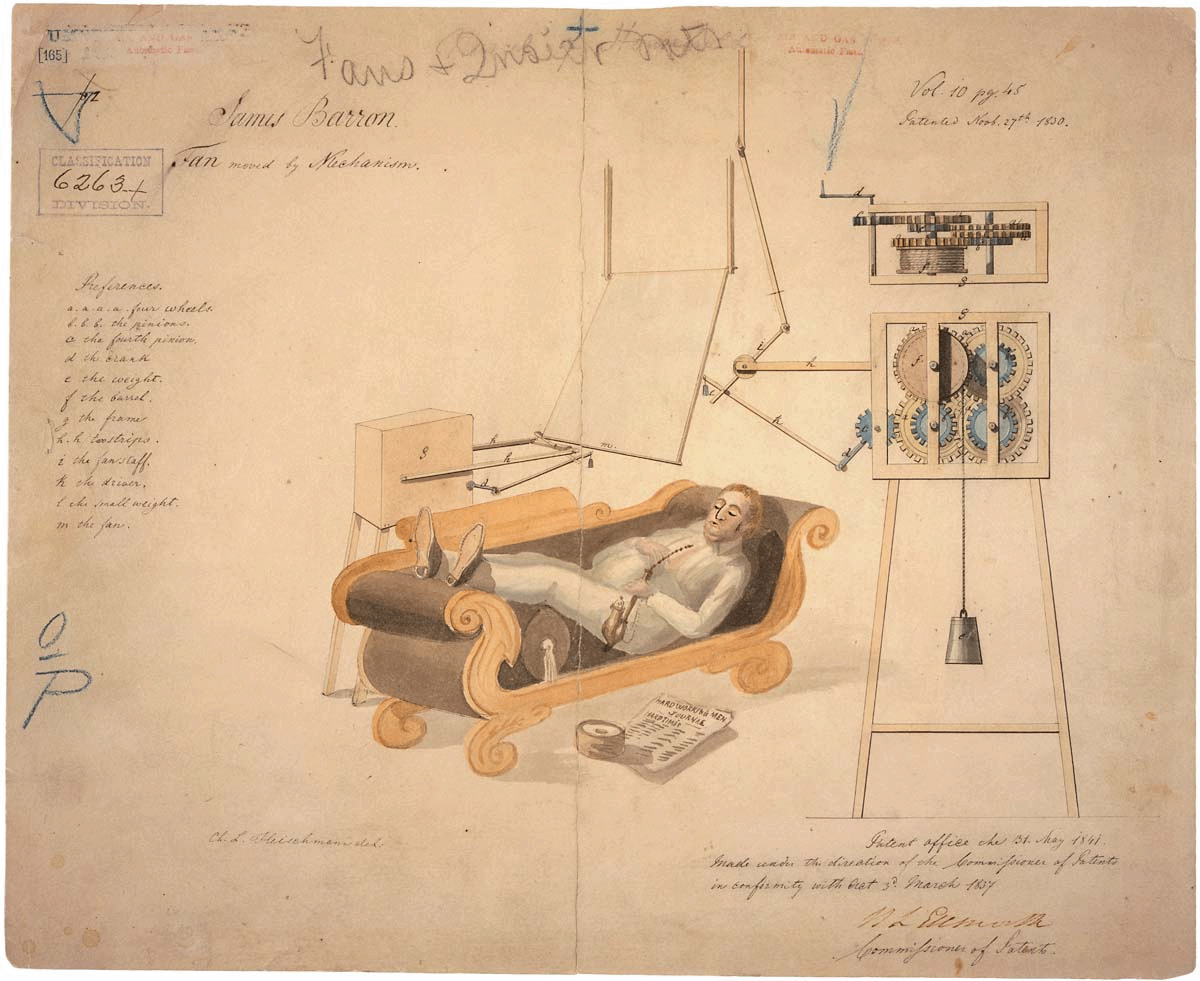
image: File:Patent, Mechanical Fan, 1830.png (wikipedia.org)
There is a debate going on the last days in relation to the idea of patenting geometric forms or the means used to produce them. The discussion started with this post on the Digital Morphogenesis blog. The post was triggered by a small note on the latest Kangaroo release:
"note : regarding the planarization functions – I have been asked to draw your attention to the patents held by Evolute, Helmut Pottmann and RFR: http://www.evolute.at/technology/patents.html"
As is turns out, there are actually two patents owned by evolute, Helmut Pottmann and RFR regarding (in simple words) the panelization of free-form surfaces with flat panels. To be more precise: they are not patenting the algorithm, they are not patenting the geometry per se, but "the physical architectural building solution". In other words, you can re-invent the algorithm, you can create a different algorithm that offers the same solution and you can play as much as you want with such forms in your computer. But if you decide to build the form, then you have to pay 1% of the construction cost. Really?
The blog post mentioned before points out the insanity of the situation. You can read evolution's answer here, and the answer of the creator of Kangaroo here. Better read for yourselves so you can draw conclusions, but here is how I see it:
Patenting of algorithms, geometrical forms, their constructed version or whatever else you can think of in this line, is fundamentally against any idea of intellectual or creative freedom. I don't really care if someone is a patent troll or not, the problem begins with the patent itself. If someone wants to capitalize on the research he is doing on architectural geometry, he can very well do so by selling the software (which is very much true for evolute), or by selling his services as an expert. Now, if he thinks that this is not enough there is a simple answer: do not conduct the research. Somebody else will. I am afraid that it is a rather important issue, and it is in the hands of all the people that are part of this community to give a strong answer: by voicing our opinion, by not supporting in any way those that follow such practices, by creating open source, freely available software and (equally important) by appropriately crediting the work of others that has helped us in our work. Let's just use the power of bottom-up processes.

update Sep 07: A new blog post from evolute on the subject here.
Looks like they are trying to make sure that we understand that they do have the patent. And no, by adding a little bit of torsion, you can not escape, they are going to get you!

August 2011: Chania

Friday, September 2, 2011 § 0

I just return from an intensive 10-days-stay at Chania, where first the Sens[e-Res]ponsive Architecture workshop and then the "Rethinking the Human in Technology-Driven Architecture" conference took place. The results of both were really satisfying. The 3 student teams of the workshop worked intensively for seven days and produced some great ideas and 3 interactive installation (currently on exhibition in the Mediterranean Center of Architecture). I have to thank everyone involved in the workshop, and especially Kostis Oungrinis, Marianthi Liapi and Socratis Yiannoudes for being amazing hosts, and Maria Voyatzaki for the invitation and all the help. Hopefully the students will start uploading their projects on the workshops' blog soon, but here are some random photos:

 
The conference on the other hand had some great presentations and a lot of interesting ideas. Manuel DeLanda's presentation/performance was an ideal closing! My presentation was in the morning session of the second day, under the title "Network Protocols / Architectural Protocols. Encoded Design Processes in the Age of Control" The full schedule of the conference is here.

Sens[e-Res]ponsive Architecture Workshop

Friday, May 27, 2011 § 0

This August I will be part of the Sens[e-Res]ponsive Architecture Workshop. The workshop will take place during 22-29.08.2011 at the Department of Architecture at the Technical University of Crete in Chania, Greece.

The overall discourse of the workshop revolves around the contextual and material frameworks of mediums, tools and techniques to create sensponsive environments that extend from useful to collaborative, developing a "sense" of their own. This year’s theme involves the design of an intriguing space for children with responsive partitions, utilizing rhino3D grasshopper with firefly and arduino. A detailed description of the theme can be found here.

The workshop will be taught by an interdisciplinary team of designers and theorists from Harvard, MIT, TU Delft, University of East London (UEL), Aristotle University of Thessaloniki (AUTh) and the Technical University of Crete (TUC). More information can be found here.

The Sens[e-Res]ponsive Architecture Workshop is now open to applications. Anyone interested in participating can fill-in an application form and submit the necessary material here.

Protocol Architecture / Beyond Representation @ UPatras

Tuesday, May 24, 2011 § 0

On Wednesday (14:00) I will be at the School of Architecture of the University of Patras, where I will be giving a lecture under the title "Protocol Architecture / Beyond Representation". The subject is somewhere between encoded architectural protocols and the architectural drawing as a generative tool. The lecture will be part of the course 'Architectural Design and Digital Media'. Many thanks to Yannis Zavoleas for the invitation.


New Infrared project installed today

Thursday, March 24, 2011 § 1

The new infrared project was installed today in Aristotle Square, Thessaloniki. More info here.


Thess Bic Seat EEE?

Sunday, March 13, 2011 § 1

A new infrared project is almost ready to launch. Meanwhile, this a video of the previous one. More info on the previous project here, and for the new one will follow...


Digital Representations Final Review

Friday, February 4, 2011 § 1


This year's class of Digital Representations has just ended. Here are some images of the projects.

Fields part I: Orientation

Wednesday, December 1, 2010 § 2

Fields have been an issue in architectural discourse, at least for the last 25 years. Stan Allen in his – now classic – text “from object to field” specifies some of the properties of a field. One is multiplicity. Fields are always multiple, since they are made out of a large number of individual elements, but most importantly because they allow multiple connections/relations between those elements. Then, they have a non-hierarchical character. Each element of the field is equal to all others, and gets differentiated from them due to local conditions. Also fields are inherently expandable (Allen uses the example of the Cordoba Mosque to illustrate that): A field can be expanded, virtually to infinity, without changing its inherent rules and syntax.


Computation added the tools necessary in order to study such field conditions. The element of a field is in its essence – no matter what its visual representation is – a vector. A vector has – at least in Euclidean space – a length (or magnitude) and a direction. Therefore a field of vectors becomes the ideal tool to represent, to study or to create flows (of energy, of matter, of information). And it is as such that the field has been used most successfully in computational experiments in architecture. Object-e has been involved in several such experiments during the last 5 years, which resulted in several (projects) but also in several tools created in order to extend the functionality of existing software in such directions. So this post is one of a series that will present some of those (simple but sometimes useful) tools and make them available for download (provided that I find the time to sort and clean those scripts a little bit…)


Orientation_field.ms is a script of this kind that does what the name implies: alters the orientation of a field of objects based on the distance of each object from several attractor points. Therefore focuses on one of the properties of the vector (direction) and it does so quite literally. The script is simple enough, but it serves as a good base in order to expand it more and enrich it with more functionality (and meaning). An earlier and even more primitive version of that script was used for Axi:Omes’ Digital Fabrication Lab project, 3 years ago. Of course the really fun part was actually (and manually) building that nice and clean digital model, which meant cutting, bending, sanding, drilling, threading and putting in place hundreds of steel bars, each one of different size and rotation. I think that it was all that work that gave meaning to the project. I miss those days…

OEK-SIKA 2010 Competition: Honorable Mention

Monday, November 15, 2010 § 2

The results for the OEK-SIKA 2010 Competition have just been announced, where we are awarded with a honorable mention. The competition concerns the design of a housing project at the outskirts of Thessaloniki. Congratulations to our hardworking team: Theodora Christoforidou, Sebastian Duque, Dimitris Gourdoukis, Roumbini Makridou, Vasilis Ntovros, Spyros Papadimitriou, Katerina Tryfonidou, Fotis Vasilakis.

CA Landscapes pt. I

Friday, November 5, 2010 § 2


Two abstract landscapes, exploring the notion of vertical algorithmic growth. A CA is the basic algorithm, and it then gets interpreted into geometry. Those two images are actually early sketches. Hopefully more will follow in that direction.
Also, I am afraid that I drove my pc to its limits with this model counting 7.870.016 polygons. Somehow you always seem to need more computational power...