infrared @ SYMBIOSIS

Thursday, October 6, 2011 § 0

A new infrared project, under the title 313/315 is part of the SYMBIOSIS exhibition at the hotel Ariston, in the context of the XV Biennale de la Mediterranee.
The exhibition is opening on Friday, October 7th, at Hotel Ariston, Dioikitiriou (Karaoli & Dimitriou) 5. Starting at 21:00 and onwards.

Of patents, trolls and differential geometries.

Monday, September 5, 2011 § 3

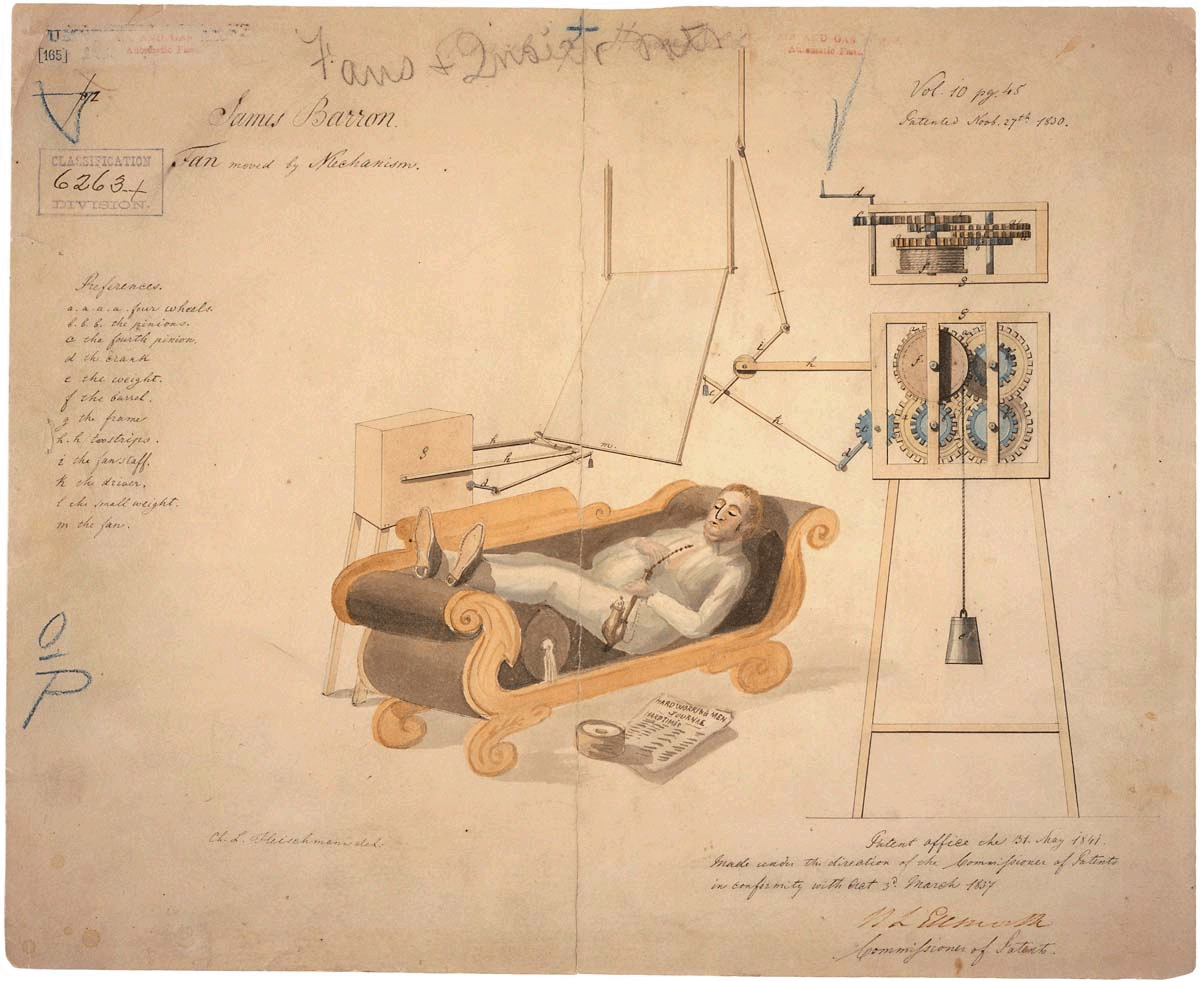
image: File:Patent, Mechanical Fan, 1830.png (wikipedia.org)
There is a debate going on the last days in relation to the idea of patenting geometric forms or the means used to produce them. The discussion started with this post on the Digital Morphogenesis blog. The post was triggered by a small note on the latest Kangaroo release:
"note : regarding the planarization functions – I have been asked to draw your attention to the patents held by Evolute, Helmut Pottmann and RFR: http://www.evolute.at/technology/patents.html"
As is turns out, there are actually two patents owned by evolute, Helmut Pottmann and RFR regarding (in simple words) the panelization of free-form surfaces with flat panels. To be more precise: they are not patenting the algorithm, they are not patenting the geometry per se, but "the physical architectural building solution". In other words, you can re-invent the algorithm, you can create a different algorithm that offers the same solution and you can play as much as you want with such forms in your computer. But if you decide to build the form, then you have to pay 1% of the construction cost. Really?
The blog post mentioned before points out the insanity of the situation. You can read evolution's answer here, and the answer of the creator of Kangaroo here. Better read for yourselves so you can draw conclusions, but here is how I see it:
Patenting of algorithms, geometrical forms, their constructed version or whatever else you can think of in this line, is fundamentally against any idea of intellectual or creative freedom. I don't really care if someone is a patent troll or not, the problem begins with the patent itself. If someone wants to capitalize on the research he is doing on architectural geometry, he can very well do so by selling the software (which is very much true for evolute), or by selling his services as an expert. Now, if he thinks that this is not enough there is a simple answer: do not conduct the research. Somebody else will. I am afraid that it is a rather important issue, and it is in the hands of all the people that are part of this community to give a strong answer: by voicing our opinion, by not supporting in any way those that follow such practices, by creating open source, freely available software and (equally important) by appropriately crediting the work of others that has helped us in our work. Let's just use the power of bottom-up processes.

update Sep 07: A new blog post from evolute on the subject here.
Looks like they are trying to make sure that we understand that they do have the patent. And no, by adding a little bit of torsion, you can not escape, they are going to get you!

August 2011: Chania

Friday, September 2, 2011 § 0

I just return from an intensive 10-days-stay at Chania, where first the Sens[e-Res]ponsive Architecture workshop and then the "Rethinking the Human in Technology-Driven Architecture" conference took place. The results of both were really satisfying. The 3 student teams of the workshop worked intensively for seven days and produced some great ideas and 3 interactive installation (currently on exhibition in the Mediterranean Center of Architecture). I have to thank everyone involved in the workshop, and especially Kostis Oungrinis, Marianthi Liapi and Socratis Yiannoudes for being amazing hosts, and Maria Voyatzaki for the invitation and all the help. Hopefully the students will start uploading their projects on the workshops' blog soon, but here are some random photos:

 
The conference on the other hand had some great presentations and a lot of interesting ideas. Manuel DeLanda's presentation/performance was an ideal closing! My presentation was in the morning session of the second day, under the title "Network Protocols / Architectural Protocols. Encoded Design Processes in the Age of Control" The full schedule of the conference is here.

Sens[e-Res]ponsive Architecture Workshop

Friday, May 27, 2011 § 0

This August I will be part of the Sens[e-Res]ponsive Architecture Workshop. The workshop will take place during 22-29.08.2011 at the Department of Architecture at the Technical University of Crete in Chania, Greece.

The overall discourse of the workshop revolves around the contextual and material frameworks of mediums, tools and techniques to create sensponsive environments that extend from useful to collaborative, developing a "sense" of their own. This year’s theme involves the design of an intriguing space for children with responsive partitions, utilizing rhino3D grasshopper with firefly and arduino. A detailed description of the theme can be found here.

The workshop will be taught by an interdisciplinary team of designers and theorists from Harvard, MIT, TU Delft, University of East London (UEL), Aristotle University of Thessaloniki (AUTh) and the Technical University of Crete (TUC). More information can be found here.

The Sens[e-Res]ponsive Architecture Workshop is now open to applications. Anyone interested in participating can fill-in an application form and submit the necessary material here.

Protocol Architecture / Beyond Representation @ UPatras

Tuesday, May 24, 2011 § 0

On Wednesday (14:00) I will be at the School of Architecture of the University of Patras, where I will be giving a lecture under the title "Protocol Architecture / Beyond Representation". The subject is somewhere between encoded architectural protocols and the architectural drawing as a generative tool. The lecture will be part of the course 'Architectural Design and Digital Media'. Many thanks to Yannis Zavoleas for the invitation.


New Infrared project installed today

Thursday, March 24, 2011 § 1

The new infrared project was installed today in Aristotle Square, Thessaloniki. More info here.


Thess Bic Seat EEE?

Sunday, March 13, 2011 § 2

A new infrared project is almost ready to launch. Meanwhile, this a video of the previous one. More info on the previous project here, and for the new one will follow...


Digital Representations Final Review

Friday, February 4, 2011 § 1


This year's class of Digital Representations has just ended. Here are some images of the projects.

Fields part I: Orientation

Wednesday, December 1, 2010 § 3

Fields have been an issue in architectural discourse, at least for the last 25 years. Stan Allen in his – now classic – text “from object to field” specifies some of the properties of a field. One is multiplicity. Fields are always multiple, since they are made out of a large number of individual elements, but most importantly because they allow multiple connections/relations between those elements. Then, they have a non-hierarchical character. Each element of the field is equal to all others, and gets differentiated from them due to local conditions. Also fields are inherently expandable (Allen uses the example of the Cordoba Mosque to illustrate that): A field can be expanded, virtually to infinity, without changing its inherent rules and syntax.


Computation added the tools necessary in order to study such field conditions. The element of a field is in its essence – no matter what its visual representation is – a vector. A vector has – at least in Euclidean space – a length (or magnitude) and a direction. Therefore a field of vectors becomes the ideal tool to represent, to study or to create flows (of energy, of matter, of information). And it is as such that the field has been used most successfully in computational experiments in architecture. Object-e has been involved in several such experiments during the last 5 years, which resulted in several (projects) but also in several tools created in order to extend the functionality of existing software in such directions. So this post is one of a series that will present some of those (simple but sometimes useful) tools and make them available for download (provided that I find the time to sort and clean those scripts a little bit…)


Orientation_field.ms is a script of this kind that does what the name implies: alters the orientation of a field of objects based on the distance of each object from several attractor points. Therefore focuses on one of the properties of the vector (direction) and it does so quite literally. The script is simple enough, but it serves as a good base in order to expand it more and enrich it with more functionality (and meaning). An earlier and even more primitive version of that script was used for Axi:Omes’ Digital Fabrication Lab project, 3 years ago. Of course the really fun part was actually (and manually) building that nice and clean digital model, which meant cutting, bending, sanding, drilling, threading and putting in place hundreds of steel bars, each one of different size and rotation. I think that it was all that work that gave meaning to the project. I miss those days…

OEK-SIKA 2010 Competition: Honorable Mention

Monday, November 15, 2010 § 2

The results for the OEK-SIKA 2010 Competition have just been announced, where we are awarded with a honorable mention. The competition concerns the design of a housing project at the outskirts of Thessaloniki. Congratulations to our hardworking team: Theodora Christoforidou, Sebastian Duque, Dimitris Gourdoukis, Roumbini Makridou, Vasilis Ntovros, Spyros Papadimitriou, Katerina Tryfonidou, Fotis Vasilakis.